
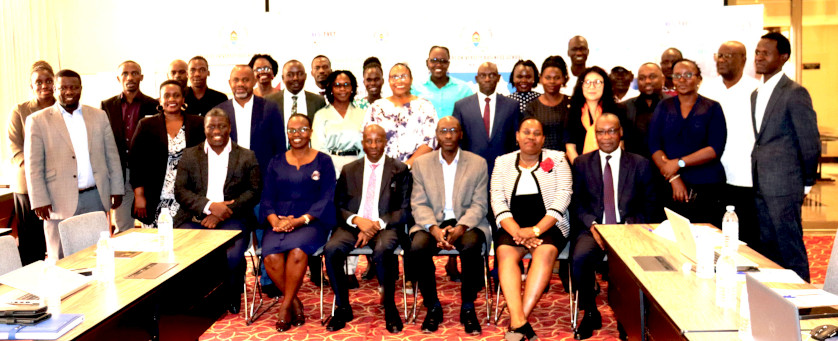
Prof. Moses Muhwezi in a group photo with the participants at Grandville Manor Hotel, Bugolobi
Makerere University Business School (MUBS) is taking bold steps to address Uganda’s energy and skills challenges by launching a groundbreaking program to equip women and youth with practical skills in alternative and cleaner energy solutions. The initiative aims to transform communities reliant on charcoal and firewood, while fostering economic empowerment and environmental sustainability.
To kickstart the program and engage key stakeholders, the Faculty of Entrepreneurship and Small Business Management hosted a stakeholders’ inception workshop for the Green Energy for Women and Youth Resilience in East Africa program on November 27, 2025, at Grandville Manor Hotel, Bugolobi.
The workshop, held under the theme “Bridging Energy Skills Gap through Technical and Vocational Education and Training (BES-TVET),” brought together more than 600 participants from Central Uganda, including representatives from vocational institutions, government agencies, and development partners. The initiative is funded by the International Development Research Centre (IDRC) and the Government of Canada.
“This is the right time to skill our people. We are learning from vocational institutions to align academic programs with real-world needs. At MUBS, we do not only teach; we strive to make tangible impacts in our communities,”
Prof. Muhwezi
Prof. Moses Muhwezi, Principal of MUBS, delivered the opening remarks, highlighting the workshop’s focus on empowering women and youth as key drivers of economic growth and environmental stewardship. He expressed gratitude to IDRC and vocational institute stakeholders and reaffirmed the University’s commitment to translating research into practical solutions.
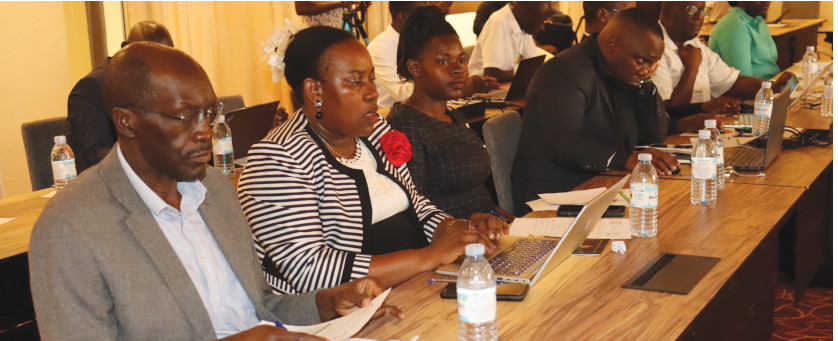
Dr. Paul Okwi, Coordinator for IDRC Uganda, at the stakeholders’ inception workshop for the Green Energy for Women and Youth Resilience in East Africa program
“This is the right time to skill our people. We are learning from vocational institutions to align academic programs with real-world needs.
At MUBS, we do not only teach; we strive to make tangible impacts in our communities,” Prof. Muhwezi stated. He added that the initiative aims to identify knowledge gaps and develop evidence-based solutions to guide policy and decision-making.
Dr. Paul Okwi, Coordinator for IDRC Uganda, urged participants to position themselves for global energy transitions, stressing that the inclusion of women and youth is critical for reshaping the green energy sector and driving both economic growth and environmental sustainability.
Assoc. Prof. Isa Nsereko, Dean of the Faculty of Entrepreneurship and Small Business Management, assured stakeholders that the Faculty is ready to implement the program and generate measurable benefits for the targeted communities.
Dr. Sylvia Aarakit, Principal Investigator of the Green Project, provided an overview of the initiative, emphasizing the importance of locally driven energy transitions. She noted that the project collaborates with technical and vocational institutions, including Nakawa Vocational Institution in the Central Region and Uganda Martyrs Vocational and Training Institution in Soroti, Eastern Region, to promote sustainable energy practices.
The program equips participants to produce alternative and affordable energy solutions and convert waste, commonly known as kasasiro, into usable products like charcoal alternatives. According to the Uganda Bureau of Statistics, only 19% of Ugandans currently use clean energy for cooking, with the majority relying on firewood and charcoal, contributing to deforestation and environmental degradation.
Through this initiative, MUBS aims to bridge the skills gap, foster climate resilience, and empower women and youth to drive sustainable development in Uganda and across East Africa.